
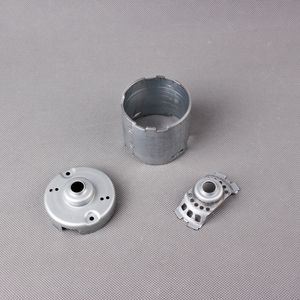
deep drawing tooling

Understanding Deep Drawing Tooling
Deep drawing tooling is an essential element in the metal forming industry, particularly when it comes to producing complex shapes from sheet metal. The process involves the use of dies and punches to transform flat sheets into three-dimensional components.
Key Components of Deep Drawing Tooling
The tooling system generally comprises several components that work harmoniously to ensure precision and quality during production:
- Die: A die is the female component that defines the final shape of the product. It must be crafted with high precision to avoid defects.
- Punch: The punch performs the action of pressing the sheet metal into the die cavity, shaping it accordingly. This component must endure significant mechanical stress.
- Blank Holder: Positioned above the sheet, this component maintains pressure on the material to prevent wrinkling or undesired movements while being drawn.
- Ejector Pins: After forming, ejector pins are crucial for releasing the finished part from the die without causing damage.
Materials Used in Deep Drawing Tooling
Tooling materials significantly influence the performance and longevity of deep drawing processes. Commonly employed materials include:
- Tool Steel: Known for its hardness and wear resistance, tool steel is predominantly used for making dies and punches.
- Aluminium: While not as durable as steel, aluminium makes lightweight tools, especially beneficial for prototype tooling.
- Copper Alloys: Utilized in specific applications due to their excellent thermal conductivity, facilitating better heat dissipation during the forming process.
Design Considerations for Deep Drawing Tooling
Creating effective deep drawing tooling requires careful consideration of various design aspects:
- Draft Angles: Incorporating appropriate draft angles helps facilitate the removal of parts from the die with minimal friction.
- Fillet Radii: Smooth transitions at corners reduce stress concentrations, thus enhancing the durability of both the die and the formed part.
- Thickness Variation: Ensuring uniform thickness throughout the part aids in achieving consistent mechanical properties.
The Role of Simulation in Tooling Development
Advancements in simulation technologies have revolutionized the way deep drawing tooling is developed. Finite Element Analysis (FEA) allows engineers to predict how materials will behave under various conditions, thereby optimizing the tooling design before physical prototypes are created. This predictive capability minimizes costly iterations, often leading to a more efficient and economical design process.
Challenges in Deep Drawing Tooling
Despite its advantages, deep drawing tooling faces a range of challenges:
- Material Limitations: Certain materials may have low ductility, posing difficulties in forming. Choosing the right alloy is therefore crucial.
- Tool Wear: Over time, tooling can degrade due to repeated use, necessitating regular maintenance or replacement.
- Temperature Control: Managing temperatures during the deep drawing process is vital; excessive heat can affect both tooling and the quality of the finished product.
Innovations in Deep Drawing Tooling
Recent innovations focus on enhancing efficiency and reducing costs. For instance, companies like Sweetlove Toy have started integrating advanced coatings that increase tool life and reduce friction. Additionally, additive manufacturing techniques are being explored for creating complex tooling geometries that were previously unattainable using traditional methods.
Applications of Deep Drawing
Deep drawing finds extensive application across various industries:
- Automotive: From vehicle bodies to engine components, deep drawing plays a critical role in the automotive sector.
- Aerospace: Aircraft components benefit from the lightweight and strong parts produced through deep drawing techniques.
- Consumer Products: Many everyday items, such as cookware and containers, utilize deep drawn parts for functionality and aesthetics.
Conclusion
Deep drawing tooling represents a sophisticated intersection of engineering and material science, essential for the production of high-quality, complex components. By addressing the challenges inherent to the process and leveraging innovative technologies, manufacturers can enhance productivity and maintain high standards in product quality.
Applications
Industrial Manufacturing
Suitable for various industrial manufacturing processes and automation systems.
Commercial Buildings
Perfect for commercial facilities requiring reliable and efficient solutions.
Machinery Equipment
Ideal for integration into various machinery and equipment systems.
OEM Projects
Customizable solutions for OEM and ODM project requirements.
Logistics & Warehousing
Optimized for logistics and warehouse management applications.
Energy Systems
Compatible with renewable energy and power distribution systems.